Thursday, 16 July 2020

Change Ahead(Little things change your perception)

5 Little-Known Facts About Habits That Will Change The Way You Look At Them Forever
Vishal seth
july 16 ,2020· 6 min read

Habits.
You know you have bad ones and good ones.
You are perfectly aware of the fact that you “should really stop smoking” or “finally start working out again”.
But how can you change something, if you don’t know how it works?
When you have no clue that your car needs oil to run, how can you know it’s oil you need to put in when it suddenly stops dead in the middle of the road?
The solution is to educate yourself.
Once you know how habits work, changing them becomes much easier.
That’s why 5 facts about habits hardly anyone is aware of to share with you today. you’ll know what’s happening — and changing your behavior will be easier.
Long gone are the times when experimenting with habits such as meditation or yoga was only for Zen monks and gurus.
Nowadays everyone and their brother is doing yoga and over 2 million people use HeadSpace, an app for guided meditations.
Because more and more the findings from research start seeping into our brains: habits matter.
This study from Duke University in 2006 found that up to 45% of all our daily behaviors are automatic.
Let me say that again: You spend 1 out of every 2 minutes doing something that you’re not even aware of.
2. Habits are a way for your brain to save energy
One word: energy.
Your brain is the most efficient processor on the planet.Forget Moore’s law and doubling the cores of your CPU, if we understand the brain in it’s entirety, we win.Your brain makes up only 2% of your total mass, but it consumes 25% of all the oxygen you inhale.
this thing better be efficient. And it is. That’s why it’s constantly looking for new ways to save energy.
Automating behaviors in the form of habits is one of the best ways to do so.
Your brain divides a complex pattern into small chunks. Each chunk is then automated, requiring less and less brain activity the more often it is repeated.
Researchers recreated this behavior with rats running through mazes. After a clicking noise which opened the door into the maze, the rats had to find their way through 2 sections for a piece of chocolate.
Once they knew: “As soon as the door clicks I can just run straight, turn left and get some chocolate”, their brain put their bodies on an automated sequence, minimizing the energy required to take action or process information along the way.
The exact same thing happens when you reach for the cookie jar for the millionth time — your brain just doesn’t consider it a task anymore — and you go on autopilot.
Which is why…
3. Habits are even tougher to break than you thought — way tougher
Sometimes I look at people who smoke and think: “What the fudge? Does he have no clue how short life is? How can I take him even seriously, if he’s smoking?”That’s a mistake (I’m human too).
It’s so easy to judge others based on actions and ourselves based on intentions.
But that guy, standing at the corner, puffing on his cigarette, isn’t trying to.
He probably has all the intention to stop — it’s just freaking hard to do.
I’m sorry, random dude.
One of the wisest people on the planet.

The reason habits are so tough to break lies in the structure of your brain.
Evolutionary speaking, the farther outside you go, the newer the parts of the brain. Your prefrontal cortex, where all complex thinking is done, is right behind your forehead.
Here’s where the basal ganglia is, the part of the brain where habits are formed:
This little lump of tissue with the size of a golfball has been around for a few thousand years.
It already made sure the caveman ancestor of your great-grandfather kept breathing, swallowing and running away from a saber tooth tiger.
If that’s the kind of stuff that’s anchored in your basal ganglia, then you can imagine it would be fairly hard to get it out of there again.
As researchers’ work with a man named Eugene Pauly, 71-years old, suffering from severe memory loss after illness, showed, habits rooted in the basal ganglia are so strong, they can survive severe brain damage.
It’s no wonder you can’t just quit smoking from one day to the next.
4. Habits are a spiritual thing — you better believe it
The reason why AA (Alcoholics Anonymous) is so efficient and has boasted about 2 million members each year, for the past 25 years, is surely not it’s 12-step program.
The steps help, but they’re not magic.
Alcohol addiction is a serious medical condition, people institutionalize themselves to get rid it.
What fuels the success of AA is belief.
Some time during that first meeting, every newcomer looks around and starts thinking: “If it worked for that guy over there, why not for me?”
Getting together, sharing feelings and rallying together creates a common belief among the group, that things can change.
And to top it all off: belief works on top of belief.
Studies have shown that while no particular religion helped AA individuals reach sobriety faster, having any sort of faith at all made a huge difference over atheists and agnostics.

5. One keystone habit can change everything
Once we go further down the “habit hole”, we usually find dozens of things we want to change.
Quit biting nails, stop drinking, don’t eat out so much, start running AND swimming.
This is neither efficient, nor even necessary.
It’s enough for you to change one habit, it just has to be the right one.

Duhigg describes these as keystone habits, which cause a positive ripple effect and automatically infer changes in other areas.

Monday, 6 July 2020

The books on Habits Which is Life Changing

Life-Changing Books 
To Help You 
Build Better Habits


1. The Power of Habit by Charles Duhigg:-
The interesting thing about habits is that once we develop them, they go totally unnoticed in our day-to-day activities. For example, you probably don’t think about how many simultaneous actions go into reversing your car out of the garage and into the street safely and smoothly. You just do it. That’s a habit.
The Power of Habit teaches you how to be deliberate about building better habits that serve you both in life and in business.

2. Drive by Daniel Pink:-
This book will equip you with everything you need to know about developing the habit of self-motivation. In other words, this book will teach you some of the most powerful leadership lessons you’ll ever learn.Pink explains how we can best motivate ourselves and others by understanding how to utilize intrinsic motivators. Bottom line? You can’t lead a successful life unless you’ve developed a habit of motivating yourself on a consistent basis, and Drive is a cornerstone book on how to figure that out.

3. Mindset by Carol Dweck:-
Mindset discusses the differences between people with a “fixed” mindset versus those with a “growth” mindset. Our mindset determines the way we deal with tough situations and setbacks as well as our willingness to deal with and improve ourselves. This book demonstrates how we can achieve our goals by changing our mindset and then developing the success habits to help us nurture that psychological switchover the long-run. It’s a very powerful book on personal transformation that’s also backed by sound scientific research to boot.

4. The ONE Thing by Gary Keller, Jay Papasan:-
The key to sustainable success is actually simple: focus on one thing and see it through for long enough that you achieve your goals. That’s it. Success is sequential, not simultaneous. This book breaks down the mechanics of that process.

5. Meditations by Marcus Aurelius:-
This book was written over 1800 years ago. Guess what? The powerful principles, written way back in the second century, remain just as applicable today. Just read this quote and you’ll understand what I mean:

“For how could we do what justice requires if we are distracted by things that don’t matter, if we are naive, gullible, inconstant?”

He’s got to be referring to our texting and driving habits, right? The Stoics were known for their disciplined pursuit of excellence, especially when it comes to maintaining emotional stability—which they kept regardless of how stressful a situation they might’ve been dealing with at any given moment. This type of emotional stability wasn’t built overnight. It was built by way of habit. Want to learn about adding some Stoic flare to your own habits?

6. Willpower by John Tierney, Roy Baumeister:-
what’s the role of willpower in helping us achieve our goals? The answers will surprise you. They’ll also provide you with actionable ways to reshape your lifestyle habits in a way that allows you to find and ignite that charge within yourself to help you achieve lasting change, progress, and ultimately success. Decades of scientific research tells us that the key to forming and sustaining habits is self-control . And if you want to build up your own willpower muscles, then this is the book you need to read.
7. Outliers by Malcolm Gladwell:-
This is a book about success and how there’s a lot more to it than being smart and working hard. Maybe you’ve heard of Gladwell’s famous 10,000-hour rule and how it relates to success. Even then, there’s still so much more to learn about how successful people became so successful in the first place.

8. The 7 Habits of Highly Effective People by Stephen Covey:- 
In the book, Stephen Covey says,“People can’t live with change if there’s not a changeless core inside them. The key to the ability to change is a changeless sense of who you are, what you are about and what you value.”

9. Mini Habits by Stephen Guise:-
Mini Habits is all about how taking small steps daily can lead to massive changes over time. If you’ve been struggling to lose that fat and achieve your health and fitness goals.then this book is going to break down the big ideas you need to know in order to bust through those sticking points and build the habits you need to succeed.

10. The Effective Executive by Peter Drucker:- 
In this book, author Peter Drucker tells us that “effectiveness must be learned.” What does that mean? It means that being effective is a habit, but so is being ineffective. Often times, people think they’re being effective when what they’re really being is efficient—there’s a difference. Being efficient means to be doing things right. Being effective means to be doing the right things. This book teaches you how to develop the habit of doing the latter so that you can achieve success in life and business as quickly and effectively as possible.

11. Make It Stick by Peter C. Brown, Henry Roediger, Mark McDaniel:-
We are now living in the age of distractions and constant notifications about the things that don’t matter. And to make matters worse, we’ve got more information flowing into our purview than we ever have before. In order to make sense of all this “stuff” and focus on our most meaningful objectives in life, we’ve got to develop the habit of learning how to learn. In other words, in order to succeed in the modern world, we need to develop the skill of grasping and retaining important concepts quickly. That’s what Make It Stick helps us do.


these books can be reflect your inner personality and promote your good habits.any book you will start to read then you feel inner enthusistic power .No one can reach your goal at one day ,its consisting process.
You also visit on my blog vishalseth1904.blogspot.com

Tuesday, 30 June 2020

Habit of Writing :- built your Articals notes

Daily Writing Habit-change your mindset and build your self improvement:
One of the most important habits that you have  formed in your life is daily writing.Without question, writing every day has brought you many great things: A better career, fulfillment, self-improvement, and most importantly, the ability to share your ideas with to everyone , the reader.
I recommend that to everyone because of these 5 reasons:

1:-Better self-discipline:
Living a life of pleasure is simple. Everyone can “Netflix and chill.” It’s easy to “hang out” all the time. But those easy things will not give you inner satisfaction. The reason that we don’t do anything useful with our precious time is that we lack self-discipline. But when you write every day, you strengthen your discipline. You can use that better self-discipline to achieve virtually anything in life.

2:-Improving your persuasion skills:
Writing is nothing more than persuading the reader with words. But your tools are limited—you can only use words to tell a story. And when you write for yourself, you’re trying to convince yourself of your own thoughts. So the more you write, the better 
you become at persuasion.

3:-Cultivating self-awareness:
Nothing will help you to get to know yourself more than translating your thoughts into words. When you force yourself to write every day, you automatically become more aware of your thoughts. And self-awareness is one of the most important skills that predict career success.

4:Better decision making:
What makes a good decision? When I ask people that question, I often get answers like:

“When the outcome is successful.”

Too often, we do something without fully understanding why we do it. Think about it. How often do you answer “I don’t know” when someone asks you “Why did you do that?” That’s the sign of weak thinking. Sure, we don’t know everything. But we must aware of that too. And when you write about your decision-making process, you will automatically become more aware of the “why.”

“Good decisions can lead to bad outcomes and vice versa.”

5:-Seeing the power of compounding in action:
When you do something every day, you don’t notice any difference at that moment. You think, “Where are the benefits?” But when you keep doing it for a long time, the positive effects compound. 
(compound :- Reaping huge rewards from a series of small, smart choices. step feel insignificant, result are massive.)
Writing every day will demonstrate the power of compounding like very few other things can.

These are the benefits of one small habit which make you extraordinary  person .cluster of habits will change your all personality. you will be reach your goals  easily!

visit in facebook.com/Anshtraders.com


Sunday, 28 June 2020

Effective Habit of Highly Succesfull


Many person are tackel many problems in daily routine. But they do not understand that His habits is responsible for that.
so i want to  introduce habits of highly effective people.

Friday, 19 June 2020

Secret habits for legendary leadership

Secret Habits thats create legendary leadership

I am always doing that which I cannot do, in order that I may learn how to do it.
– Pablo Picasso
The brain is the strongest muscle in the body. You’ve heard stories of how combat soldiers have been shot repeatedly but were not aware of it until the fight was over. These stories are true, and the power to do such things comes from the mind and can be tapped into by practicing mental preparation.
Are you aware of the impact of awesome habits for success and positive thinking on your personal development? But how to best build these habits and this positive attitude is another matter, isn’t it?

Let me tell you about the secret habits that I focused on.

1-Maintain positive attitude-Learn what attitude is, what aspects of your life are controlled or directed by your attitude, and how to determine your attitude at any given moment. Know what specific strategies make a positive attitude a permanent habit in your life.You will perhaps have heard this very old story illustrating the difference between positive and negative thinking.
Many years ago two salesmen were sent by a British shoe manufacturer to Africa to investigate and report back on market potential.
The first salesman reported back, “There is no potential here — nobody wears shoes.”


The second salesman reported back, “There is massive potential here — nobody wears shoes.”

This simple short story provides one of the best examples of how a single situation may be viewed in two quite different ways — negatively or positively. And it is not difficult to see which one you want, eh?

2-Be loyal-:Team loyalty in the corporate environment seems to be a dying philosophy. Loyalty to the team starts at the top.
3-Put others before yourself-:Get up every day and ask yourself what you will do to add value to your team, such as simply offering your assistance with a project.
4-Assume you don’t know enough-:Because you don’t. Any effective team member understands that training is never complete. It’s true in the SEAL teams, and it’s true in any elite team. Those who assume they know everything should be eliminated. Those who spend time inside and outside of the workplace developing their knowledge and skills will provide the momentum for their team’s forward progress.
5-Be persistent-Develop the focus and determination required to succeed. Create an attitude of gratitude as the access to fulfilling your dreams.
6-Never get comfortable-Always push yourself outside of your comfort zone. If you do this continually with every task you take on, that boundary will continue to widen. This process will ensure that you are continually maximizing your potential, which will positively impact your team.
7-Strong relationships-:Build beneficial relationships with many people. Networking and making friends is the name of the game.
8-Continuous learning-:Know what your skills are and what they are not. Keep adding to it all the time — with both your own development and surrounding yourself with others who complement your talents. Remember to focus on your strengths and set your weaknesses aside.
9-Maintain patience-:The proper timing of your words and acts will give you a big advantage over people who are impatient.Much of real happiness is a matter of being aware of what you’re doing while you’re doing it — and enraged people aren’t typically conscious of their actions.
10-Know lessons learned-:Become recognized as a corporate historian, remembering what’s been done, what’s worked and hasn’t and why, where ALL the bodies are buried, and who was responsible for putting the bodies where they were buried. Avoid relearning old mistakes.
11-Keep an open mind-:Those who close themselves off from certain ideas and associate only with like-minded people are missing out on not only personal growth but also opportunities for advancing their careers.
12-Put creative imagination to work-:Extend your physical ability to accelerate creative problem solving and goal achievement in all areas of your life
13-.Listen much more than you talk-:The most likable people know that it’s not worth offending people by expressing everything they know, even if they are true. Pay close attention to someone speaking to you and show interest.
Using a conversation as an opportunity to lecture someone may feed the ego, but it never attracts people or makes friends.


Monday, 15 June 2020

Time managments Skill


Manipulate Time With These Powerful  Time Management Tips------
Want to know how you can become a master of time management as well? 
Start by using these top super-powerful time management tips.

1. Create a time audit.-When it comes to time management, the first step you need to take is finding out where your time actually goes.
2. Set a time limit to each task-I’ve found that setting a time limit to each task prevents me from getting distracted or procrastinating. For example, if I want to write an article for my blog, I give myself two hours. So if I started at 8am, I try to get it written by 10am.
Since I put buffers between tasks and activities, if I don’t complete the task on time, I can still work on it without eating into the time reserved for something else.
3.make a To-Do-List-If you’re starting the day with a really long to do list, you’re not alone. 
Many people struggle with their productivity  and having way too many tasks to complete in one day. Luckily, there is a way to complete as many tasks as possible without becoming incredibly overwhelmed. Here are some tips:
1:Turn Off Your Social Media.
2:Start With the Hardest Task First
3:Strategically Plan Breaks
4:Reward Yourself
"Aside from keeping you focused, this also motivates you as you are able to see what you have already achieved, and what remains.”

4. Plan ahead.-One of the worst things that you can do is wake-up without a plan for the day. Instead of focusing on what needs to be done, you wander aimlessly and take care of more trivial matters.
That’s why you should always plan ahead using one of these options;
#The night before-. Before you leave work for the day, spend the last 15-minutes organizing your office and composing a list of your most important items for tomorrow.
#First thing in the morning-During your morning routine write down the 3 or 4 most urgent and important matters that need to be addressed today and work on those when you’re most productive.
5. Spend your mornings on MITs-Mark Twain once said, “If it’s your job to eat a frog, it’s best to do it first thing in the morning. And If it’s your job to eat two frogs, it’s best to eat the biggest one first.”
Gross? Sure. But, the point that Twain was making that you should take care your biggest and most-challenging tasks in the morning, aka your most important tasks (MITs) of the day.
6. Learn to delegate/outsource-Delegation and outsourcing can get a bit tricky For some it’s hard to let someone else do work that they used to do. For others, they don’t have the time to train someone else to complete certain tasks.
7. Eliminate half-work.-Regardless of where and how you fall into the trap of half–work, the result is always the same: you’re never fully engaged in the task at hand, you rarely commit to a task for extended periods of time, and it takes you twice as long to accomplish half as much,” adds Clear.Clear has found that the best way to overcome half-work is by blocking “out significant time to focus on one project and eliminate everything else.” For example, he’ll pick one exercise and only focus on that exercise while working out. He’ll also carve out a few hours to devote to an important project, but will leave the phone in another room.
8. Change your schedule-If you’re reading this article then it’s obviously because you want to discover some useful time management – and I’m more than happy to help you put. But, if you’re struggling with time management, the solution may be as simple as changing your schedule around.
9. Leave a buffer time between tasks and meeting-.Jumping immediately from one task or meeting to the next may seem like a good use of your time, but it actually has the opposite effect. We need time to clear our minds and recharge by going for a walk, meditating, or just daydreaming. After all, the human brain can only focus for about 90-minutes at a time.
10. Get organized and single-task.-Start by having a home for everything and making sure that items are put back where they belong. As the end of the day clean your workplace and create a document management system.Most people cite multitasking as the main culprit for misplacing items.
11. Follow the 80-20 rule-“The Pareto Principle also known as the 80-20 rule suggests that 80% of results come from 20% of the effort put in. This is commonly used in sales as 80% of sales typically come from 20% of the customers,”
12. Use an online calendar.-Calendars have long been a fundamental tool for time management. However, online calendars have taken this to the next level. That’s because you can access it from multiple devices, easily schedule meetings and appointments, set up reminders, create time blocks, and schedule recurring events.
13. Stop being perfect-When you’re a perfectionist, nothing will ever be good enough. That means you’ll keep going back to same task over and over again. How productive do you think your day will be as a result?
So, stop being perfect. It doesn’t exist. Do the best you can and move on.
14. Just say “No.-I know that you don’t want to upset anyone. But you can only handle so much. If you already have a full plate then decline that dinner invitation or helping your colleagues on a project until you have the spare time.
15. Instill keystone habits-Charles Duhigg, author of “The Power of Habit,” coined the term “keystone habits.”  But, what are they? Simply put, they’re habits that can transform your life, such as exercising, tracking what you eat, developing daily routines, and meditating.
16. Don’t waste time waiting-I’ll be honest. I can’t stand waiting. It’s not that I’m impatient. It’s just that I know that this is time that could be better spent elsewhere.

follow me on Anshseth1305.facebook.com and vishalseth1904.blogspot.com

Tuesday, 9 June 2020

The best 10 points for financial habits by RobertT. kyosaki

Robert T. Kyosaki√

Robert Toru Kiyosaki is the best-selling author of Rich Dad Poor Dad and he has revolutionized the financial industry through his work in sharing his thoughts on financial education. His book, Rich Dad Poor Dad advocates the importance of financial literacy and has gone on to sell millions of copies in more than 51 languages across the world. It has been listed on the New York Times bestsellers list for over six years.
Robert kyosaki teach some amazing fact about money and who to you become Rich dad .
In this article, you will discover the top 10 success principles from Kiyosaki himself.
1. Set Out to Gain Experience-set out to gain more experience. While it is true that you can learn and gain new knowledge through reading books, attending seminars and learning from other people, you cannot gain new experience simply through reading. Kiyosaki also gave a good example of cycling. He said that one cannot learn how to ride a bicycle by reading a book. The only way you can acquire that skill is to hop on the bicycle and learn to ride it.
2. The More You Give, The More You Receive-According to Kiyosaki, your primary aim is to create more value for your customers through your business. You create an excellent product or give exceptional service to your customers so that in return, they will buy more and become your loyal customers. Unfortunately, most people only think about themselves and how they can make the most of their customers. They want to create the cheapest product and wish to get the most from their customers. This will not work out in the long run.Hence, aim to be a giver. Learn to create more value and how to solve other people’s problems. Kiyosaki said that whether you are rich or you are poor, it all lies in your attitude towards money. He said he made a lot of money, but he also gives a lot of money back to the world. Just like what Anne Frank said, “No one has ever become poor by giving.”
3. Your Thinking Determine Your Success-Kiyosaki said that your biggest asset is you. And how you think is the most important key to changing your life. This is why he constantly emphasizes that if someone wanted to get rid of the rat race and become rich, he must change his thinking and learn to be financially educated.
4. Focus is Key-In one of his seminars, Kiyosaki shared his view on focus. He said that focus simply means “Follow One Course Until Successful”. And that is exactly what he did when he first started.It is the same in every area of your life. If you want to get rich and be financially free, you must do what Kiyosaki suggested and stayed focus on your course until you achieve the result you desire.
5. Hard Times Bring New Opportunities-The famous author of Think and Grow Rich, Napoleon Hill once said, “Every adversity, every failure, every heartache carries with it the seed of an equal or greater benefit.” Highly successful people believe that failures, tough times, adversities, and setbacks are great ways to learn and they contain opportunities to earn and grow higher.
Kiyosaki says that economy is a cycle, it will go up and it will go down. When things are good, the economy will be strong and perform better. When things are tough, the economy will go down and opportunities will be everywhere. And this is why he stresses that financial education is important. You want to learn how to spot the opportunity and make a great deal especially during tough times where the opportunities are everywhere.
6. Don’t Be Afraid to Lose-Every successful people fail at least once in their lifetime. Henry Ford went broke five times before he finally became successful in his automobile business. Steve Jobs, the founder of Apple was fired from the board of directors and the company he started, but he eventually made it back to Apple and built it into one of the most innovative companies of the decade.And Robert Kiyosaki said that he has failed many times in his businesses too.This is the problem with the majority. They are afraid to make mistakes and as a result, they let their fear of failure to stop them from moving forward. So from now on, treat your failure as your feedback to improve yourself and in what you do.
7:BE FINANCIALLY EDUCATED-Kiyosaki shared a lot of his ideas and concepts on the subject of personal finance. He is an advocate and believes that if someone wanted to be financially successful, he must first equip himself with the necessary financial education.
One of his principles that can change your financial status is to understand what you are working on. In his books, he categorized jobs and careers into four main categories, and they are the employee, the self-employed, the businessman, and the investor. And you need to understand which category you are in if you want to become rich.

8. Build and Grow Your Assets-One of the most important success lessons everyone should learn from Kiyosaki is to build and grow their assets. Most people have the wrong perception of assets and liabilitiesTherefore, learn to build and grow your assets. Acquire things that will generate you more money rather than take your money away. A well-designed business always increases the number of its assets. And this is exactly what you must do. Aim to acquire more assets that will generate you passive income.
9. Saving Money is Obsolete-When it comes to becoming financially successful, what most people will do is to save money. Kiyosaki said that this is not a wise move because you simply cannot keep up with the fluctuations in the value of the currency, which will weaken their buying power. The inflation rate will be higher than the interest you receive from saving money in the bank.
10. The Rich Don’t Work for Money-
Another popular concept from Kiyosaki’s book, Rich Dad Poor Dad is that the rich do not work for money, rather, they use their money to work for them. Robert Kiyosaki often says, “Money works for me”, and not the other way round.

When you ask people why they are doing all the work, they will tell you that they are working for the money. Most people spend most of their time working to earn a living and to pay the bills. The downside of this approach is that you are exchanging your time for money. And in order to make more money, you will have to sell more of your time working harder and longer hours.On the other hand, rich and successful people do not work for money. Instead, they build businesses and they make investments so that they receive passive income with little or no work. Rather than spending their time working for money, the rich make full use of their money to work for them.

conclusion-A lot of Kiyosaki’s philosophy revolves around education. He believes that people should learn as much as possible about finance. He also believes that “real” financial education occurs outside the classroom. Kiyosaki is critical of people who spend years and money on advanced degrees.

Quick Look: The Best Robert Kiyosaki Books

#Cashflow Quadrant: Rich Dad’s Guide to Financial Freedom
#Rich Dad’s Guide to Investing: What the Rich Invest In, That the Poor and Middle Class Do Not
#The Business of the 21st Century
#Rich Dad Poor Dad: What the Rich Teach Their Kids About Money
#Rich Dad’s Increase Your Financial IQ: Get Smarter with Your Money 
#The Real Book of Real Estate: Real Experts. Real Stories. Real Life 
#Rich Dad’s Retire Young Retire Rich 
#Why the Rich Are Getting Richer 
#Rich Dad’s Before You Quit Your Job 
#Second Chance: for Your Money, Your Life and Our World 

Wednesday, 3 June 2020

Which qualities have for personal growth

                                  VISHAL
PERSONAL GROWTH 
The most successful people are always looking for ways to improve. They aren’t satisfied with accepting their shortcomings or resting on their laurels. Top achievers put time and energy into being their best self.
             You can’t wait for inspiration.                                     You have to go after it with a club.”
-Jack London
I’ve found a few blogs that do this especially well. They guide me to live a more purposeful life while encouraging me to do it on my terms. There is no substitute for people who have done it. 

5 Skills That work on self- Growth :-

Learn to concentrate on these five abilities in your personal development quest. They will help you skillfully attack the marketplace.

1. Absorb:-
Develop the ability to absorb, the ability to soak in, take in, be like a sponge. Sitting in class or at the workplace, sometimes it’s easy to daydream, to be preoccupied, to be somewhere else.
I read a good article once in Reader’s Digest. The title was, “Wherever You Are, Be There.” I thought that was excellent. Be there. Concentration. It’s also important in learning extra skills to really pay attention. Absorb, take in.
Most people are trying to get through the day. I’ve got a better objective for you: Learn to get from the day. Not just get through it; get from it. Soak it up. Each day is a piece of the mosaic of your life. Don’t waste any. Treat it with care. See how much you can get from a day—how much advice, how much information, how much color, how much sight and sound to add to your worth and your wealth and your equity of mind.

2. Respond:-
Develop the skill to respond, the ability to be affected by what you see and hear and sense. Success is not just knowledge. Success is response to knowledge. Success is not just experience. Success is emotion created from experience. It’s the emotional part that plays such a major part in our life and our future and our success.Responding to life means to let sad things make you sad, to let happy things make you happy, to let puzzling things puzzle you. Let things that are difficult create difficulty for you. Respond.
3. Reflect:-
Learn to reflect. Reflecting is an extra way of getting more value from what you know and what you’ve been through. Reflecting is going back over.
Take just a few minutes at the end of the day, find a place, if you can, to be alone, and just go back and think through the day. Where have you been? What did you see? What did you hear? What did you feel? If you’ll just relive it, I’m telling you, it will add multiplied value to you. The day you’ve just been through will be more valuable for your future if you just go back through it.Take a few hours at the end of the week and minutes at the end of the day, half a day at the end of the month and a weekend at the end of the year. Those are called times to reflect. Now, why go back over? Let me tell you why: to make the past more valuable. If you’ll take the time to review what’s going on, review the decision-making, review the people you’re with, review the actions you’re taking, the decisions you’re making, review all that stuff, go back through the feeling, you will make your life more valuable.
Now, why try to make your life valuable? Simple answer: to invest it in the future. We call that bright. We call that skillful, to make more out of your past, to have more value to invest in the future, instead of just trying to get through one more day, trying to get through one more week. It’s to get more out of your past and invest it in your future.

4. Act:-
Develop the ability to act, the ability to take action on your feelings and your knowledge. Disciplined action is what gives birth to ideas, enterprise and values. Without activity, ideas and dreams have no life.
Disciplined activity is the most demanding of arts to take you where you want to go. Now, sometimes it doesn’t take much of a change of activity. Daily or weekly disciplines are those small changes of intelligent activity that take you in a better direction. Here’s a good way to look at it: Ten years from now, you will surely arrive. The question is, where? Now is the time to fix the next 10 years. Fix a better course.
Now, to unsophisticated people, what they do during the day doesn’t seem to matter. But to sophisticated people, it makes all the difference in the world. The books you read, the actions you take, the disciplines you engage in on a daily basis, those are the activities that are taking you somewhere, and all of us need to take a look at where our daily activities are taking us. The activity of learning, the activity of mind, health disciplines, wealth disciplines, culture disciplines—all values come from disciplines. Ideas put into disciplined activity create value.

5. Share:-
Sharing is a unique human capacity. Sharing is a phenomenon, especially in the human experience. It seems when we share, we are the bigger and better for it.
It seems like if you share something and give it away, you’d have less. But it’s a paradox. What you share creates more for you. That’s why we call it a paradox. You’re not diminished by sharing. You’re increased.If you have a child and you love him dearly, and if a second child comes along, must you now cut your love in half? The answer is no. From some strange, mysterious source comes an increased capacity. From sharing with the first, capacity and an awareness and uniqueness are increased. So that is what I would ask you to do, become gifted in sharing.There are many ways to share. One is by the gift of language. One of the most important studies for you is the study of communication, how to affect other people .

Related Articals:-


Tuesday, 26 May 2020

one Small step can change your life

The art of making great and lasting change comes through small, steady steps.Kaizen circumvents the brain’s built-in resistance to new behaviors.Small rewards lead to big returns.

Big Ideas:-
1-Kaizen is a process of improving a habit using very small steps.
2-Kaizen disarms the brain’s fear response making change come more naturally.By asking small, gentle questions, we keep the fight-or-flight response in the ‘off’ position.
3-By taking steps so tiny that they seem trivial or even laughable, you’ll sail calmly past obstacles that have defeated you before.

Book 's Summary:

#Kaizen has two definitions:

1:-Using very small steps to improve a habit
2:-A process, or product using very small moments to inspire new products and inventions.

#Common Beliefs About Change

Myth #1: Change Is Hard
Myth #2: The Size of the Step Determines the Size of the Result, So Take Big Steps for Big Results
Myth #3: Kaizen Is Slow; Innovation Is Quicker.

#In our “bigger is better” culture of IMAX movies, supersize meals, and extreme makeovers, it’s hard to believe that small steps can lead to big changes. But the wonderful reality is that they can.”
#“There are two elements of the spirit, or purpose, in which kaizen plays an essential role: service and gratitude.”
#“Low-key change helps the human mind circumnavigate the fear that blocks success and creativity.”
#“All changes, even positive ones, are scary. Attempts to reach goals through radical or revolutionary means often fail because they heighten fear. But the small steps of kaizen disarm the brain’s fear response, stimulating rational thought and creative play.”
#“When you want to change but experience a block, you can often blame the midbrain for gumming up the works.”
#“Small, easily achievable goals—such as picking up and storing just one paper clip on a chronically messy desk—let you tiptoe right past the amygdala, keeping it asleep and unable to set off alarm bells.”
#“When you are afraid, the brain is programmed either to run or attack—not always the most practical options.”
#Small actions satisfy your brain’s need to do something and soothe its distress.
#“Your brain is programmed to resist change. But, by taking small steps, you effectively rewire your nervous system so that it does the following: ‘unsticks’ you from a creative block bypasses the fight-or-flight response creates new connections between neurons so that the brain enthusiastically takes over the process of change and you progress rapidly toward your goal.”
#“When life gets scary and difficult, we tend to look for solutions in places where it is easy or at least familiar to do so, and not in the dark, uncomfortable places where real solutions might lie.”
#“Use times of difficulty to remember that fear is the body’s gift, alerting us to a challenge.”
#“Small questions create a mental environment that welcomes unabashed creativity and playfulness. #When you ask small questions of others, you channel that creative force toward team goals. By asking small questions of yourself, you lay the groundwork for a personalized program for change.” 
#“The hippocampus’s main criterion for storage is repetition, so asking that question over and over gives the brain no choice but to pay attention and begin to create answers.”
#“Ask yourself, ‘If health were my first priority, what would I be doing differently today? What is one way I can remind myself to drink more water? How could I incorporate a few more minutes of exercise into my daily routine?’”
#“Your brain loves questions and won’t reject them … unless the question is so big it triggers fear.”
“By asking small, gentle questions, we keep the fight-or-flight response in the ‘off’ position. Kaizen questions such as ‘What’s the smallest step I can take to be more efficient?’ allow us to bypass our fears.”
“Make your questions small, and you reduce the chances of waking the amygdala and arousing debilitating fear. When fear is quiet, the brain can take in the questions and then pop out answers on its own timetable.”
“If you tend to berate yourself with negative questions (Why am I so fat?), try asking: What is one thing I like about myself today? Ask this question daily, writing your answer down in a journal or on a sheet of paper you keep in a specially designated place.”

Quality Questions

1-“If you are unhappy but aren’t sure why, try asking yourself this: If I were guaranteed not to fail, what would I be doing differently?”
2-“If you are trying to reach a specific goal, ask yourself every day: What is one small step I could take toward reaching my goal?”
3-“What is one small step I could take to improve my health (or relationships, or career, or any other area)?”
4-“Is there a person at work or in my personal life whose voice and input I haven’t heard in a long time? What small question could I ask this person?”
If somebody’s annoying you, ask yourself, “What’s one good thing about this person?”
5-“What is one small thing that is special about me (or my spouse, or my organization)?”
#“The easy technique of mind sculpture uses ‘small thoughts’ to help you develop new social, mental, and even physical skills—just by imagining yourself performing them!”
#“Small actions are at the heart of kaizen. By taking steps so tiny that they seem trivial or even laughable, you’ll sail calmly past obstacles that have defeated you before. Slowly—but painlessly!—you’ll cultivate an appetite for continued success and lay down a permanent new route to change.” 


#“If you ever feel yourself dreading the activity or making excuses for not performing it, it’s time to cut back on the size of the step.”
#“We are so accustomed to living with minor annoyances that it’s not always easy to identify them, let alone make corrections. But these annoyances have a way of acquiring mass and eventually blocking your path to change. By training yourself to spot and solve small problems, you can avoid undergoing much more painful remedies later.”
#“Whether you wish to train yourself or others to instill better habits, small rewards are the perfect encouragement. Not only are they inexpensive and convenient, but they also stimulate the internal motivation required for lasting change.” 
#“The larger the external rewards, the greater the risk of inhibiting or stunting the native drive for excellence.” 
World’s Greatest Books For Personal Growth & Wealth (Set of 4 Books): Perfect Motivational Gift Set https://www.amazon.in/dp/9389432014/ref=cm_sw_r_cp_apa_i_4WO1EbX0V4M6S

#“The kaizen approach to life requires a slower pace and an appreciation of small moments. This pleasant technique can lead to creative breakthroughs and strengthened relationships, and give you a daily boost toward excellence.”
#“As you experience success in applying kaizen to clear goals like weight loss or career advancement, remember to hold on to its essence: an optimistic belief in our potential for continuous improvement.”

Wednesday, 20 May 2020

AN ATOMIC HABIT (James clear)

                          ATOMIC HABIT

An atomic habit is a regular practice or routine that is not only small and easy to do but is also the source of incredible power; a component of the system of compound growth.
1-Habits are the compound interest of self-improvement.
2-The most effective way to change your habits is to focus not on what you want to achieve, but on who you wish to become.
3-The Four Laws of Behavior Change are a simple set of rules we can use to build better habits.
 They are:
 (1) make it obvious
(2) make it attractive 
 (3) make it easy. 
(4) make it satisfying.

Chapter 1: The Surprising Power of Tiny Habits

Success is the product of daily habits—not once-in-a-lifetime transformations.Your outcomes are a lagging measure of your habits.  Example:-Your net worth is a lagging measure of your financial habits. Your weight is a lagging measure of your eating habits. Your knowledge is a lagging measure of your learning habits. Your clutter is a lagging measure of your cleaning habits. You get what you repeat.
Time magnifies the margin between success and failure. It will multiply whatever you feed it. Good habits make time your ally. Bad habits make time your enemy.Goals are about the results you want to achieve. Systems are about the processes that lead to those results.If you want to predict where you’ll end up in life, all you have to do is follow the curve of tiny gains or tiny losses, and see how your daily choices will compound ten or twenty years down the line.
Breakthrough moments are often the result of many previous actions, which build up the potential required to unleash a major change.you find yourself struggling to build a good habit or break a bad one, it is not because you have lost your ability to improve. 
It is often because you have not yet crossed what James calls, “Plateau of Latent Potential.
When you finally break through the Plateau of Latent Potential, people will call it an overnight success.

Getting 1 percent better every day counts for a lot in the long-run.”
Habits are a double-edged sword. They can work for you or against you, which is why understanding the details is essential.Small changes often appear to make no difference until you cross a critical threshold. The most powerful outcomes of any compounding process are delayed. You need to be patient.An atomic habit is a little habit that is part of a larger system. Just as atoms are the building blocks of molecules, atomic habits are the building blocks of remarkable results.If you want better results, then forget about setting goals. Focus on your system instead.”

“You do not rise to the level of your goals. You fall to the level of your systems.

Chapter 2: How Your Habits Shape Your Identity (and Vice Versa)

Changing our habits is challenging for two reasons: 
(1) we try to change the wrong thing .
(2) we try to change our habits in the wrong way.  
“There are three layers of behavior change: "
a change in your outcomes- outcomes are what you get.
a change in your processes-Process are what you do.
a change in your identity-Identity are what you believe.
With outcome-based habits, the focus is on what you want to achieve. With identity-based habits, the focus is on who you wish to become.
The ultimate form of intrinsic motivation is when a habit becomes part of your identity.It is a simple two-step process: Decide the type of person you want to be. Prove it to yourself with small wins.Becoming the best version of yourself requires you to continuously edit your beliefs, and to upgrade and expand your identity.
The real reason habits matter is not because they can get you better results,but because they can change your beliefs about yourself.

Chapter 3: How to Build Better Habits in 4 Simple Steps

Whenever you want to change your behavior, ask yourself:
How can I make it obvious?
How can I make it attractive?
How can I make it easy?
How can I make it satisfying?
“A habit is a behavior that has been repeated enough times to become automatic.”
The ultimate purpose of habits is to solve the problems of life with as little energy and effort as possible.

Chapter 4: The Man Who Didn’t Look Right

If you’re having trouble determining how to rate a particular habit, ask yourself: ‘Does this behavior help me become the type of person I wish to be? Does this habit cast a vote for or against my desired identity?  With enough practice, your brain will pick up on the cues that predict certain outcomes without consciously thinking about it.
Once our habits become automatic, we stop paying attention to what we are doing.”The process of behavior change always starts with awareness. You need to be aware of your habits before you can change them.Pointing-and-Calling raises your level of awareness from a nonconscious habit to a more conscious level by verbalizing your actions.The Habits Scorecard is a simple exercise you can use to become more aware of your behavior.

Chapter 5: The Best Way to Start a New Habit

The 1st Law of Behavior Change is make it obvious.Many people think they lack motivation when what they really lack is clarity.
“The Diderot Effect states that obtaining a new possession often creates a spiral of consumption that leads to additional purchases.One of the best ways to build a new habit is to identify a current habit you already do each day and then stack your new behavior on top. This is called habit stacking.
Chapter 6: Motivation is Overrated; Environment Often Matters More

“Environment is the invisible hand that shapes human behavior.” Small changes in context can lead to large changes in behavior over time.Every habit is initiated by a cue. We are more likely to notice cues that stand out.Make the cues of good habits obvious in your environment.Gradually, your habits become associated not with a single trigger but with the entire context surrounding the behavior. The context becomes the cue.It is easier to build new habits in a new environment because you are not fighting against old cues.

Chapter 7: The Secret to Self-Control

“The inversion of the 1st Law of Behavior Change is make it invisible.”Once a habit is formed, it is unlikely to be forgotten.People with high self-control tend to spend less time in tempting situations. It’s easier to avoid temptation than resist it.One of the most practical ways to eliminate a bad habit is to reduce exposure to the cue that causes it.
“Self-control is a short-term strategy, not a long-term one.”

Chapter 8: How to Make a Habit Irresistible

“The 2nd Law of Behavior Change is make it attractive.”

The more attractive an opportunity is, the more likely it is to become habit-forming.
Habits are a dopamine-driven feedback loop. When dopamine rises, so does our motivation to act. it is the anticipation of a reward—not the fulfillment of it—that gets us to take action. The greater the anticipation, the greater the dopamine spike.Temptation bundling is one way to make your habits more attractive. The strategy is to pair an action you want to do with an action you need to do.

Chapter 9: The Role of Family and Friends in Shaping Your Habits

The culture we live in determines which behaviors are attractive to us.We tend to adopt habits that are praised and approved of by our culture because we have a strong desire to fit in and belong to the tribe.We tend to imitate the habits of three social groups: 
the close (family and friends)
the many (the tribe)
the powerful (those with status and prestige)

One of the most effective things you can do to build better habits is to join a culture 
 (1) your desired behavior is the normal behavior 
 (2) you already have something in common with the group.
The normal behavior of the tribe often overpowers the desired behavior of the individual. Most days, we’d rather be wrong with the crowd than be right by ourselves.If a behavior can get us approval, respect, and praise, we find it attractive.

Chapter 10: How to Find and Fix The Cause of Your Bad Habits

Your habits are modern-day solutions to ancient desires.The cause of your habits is actually the prediction that precedes them. The prediction leads to a feeling.Highlight the benefits of avoiding a bad habit to make it seem unattractive.

Chapter 11: Walk Slowly, But Never Backward

“The 3rd Law of Behavior Change is make it easy.”The most effective form of learning is practice, not planning.Focus on taking action, not being in motion.
“Habit formation is the process by which a behavior becomes progressively more automatic through repetition.”
The amount of time you have been performing a habit is not as important as the number of times you have performed it.

Chapter 12: The Law of Least Effort

“Human behavior follows the Law of Least Effort.”
We will naturally gravitate toward the option that requires the least amount of work.Create an environment where doing the right thing is as easy as possible.Reduce the friction associated with good behaviors. When friction is low, habits are easy.Increase the friction associated with bad behaviors. When friction is high, habits are difficult.Prime your environment to make future actions easier.

Chapter 13: How to Stop Procrastinating by Using the Two-Minute Rule

Every day, there are a handful of moments that deliver an outsized impact. James refers to these little choices as “decisive moments.”                “Decisive moments set the options available to your future self.” A habit must be established before it can be improved.         
“Habits can be completed in a few seconds but continue to impact your behavior for minutes or hours afterward.”
“Many habits occur at decisive moments—choices that are like a fork in the road—and either send you in the direction of a productive day or an unproductive one.”
“The Two-Minute Rule states, ‘When you start a new habit, it should take less than two minutes to do.’The more you ritualize the beginning of a process, the more likely it becomes that you can slip into the state of deep focus that is required to do great things.”
“Standardize before you optimize. You can’t improve a habit that doesn’t exist.

Chapter 14: How to Make Good Habits Inevitable and Bad Habits Impossible

“The inversion of the 3rd Law of Behavior Change is make it difficult.”A commitment device is a choice you make in the present that locks in better behavior in the future.
The ultimate way to lock in future behavior is to automate your habits.

Chapter 15: The Cardinal Rule of Behavior Change
“The 4th Law of Behavior Change is make it satisfying.”
The fourth law of behavior change—make it satisfying—increases the odds that a behavior will be repeated next time.
We are more likely to repeat a behavior when the experience is satisfying.The human brain evolved to prioritize immediate rewards over delayed rewards.
The Cardinal Rule of Behavior Change: What is immediately rewarded is repeated. What is immediately punished is avoided.To get a habit to stick you need to feel immediately successful—even if it’s in a small way.

Chapter 16: How to Stick with Good Habits Every Day
A habit tracker is a simple way to measure whether you did a habit—like marking an X on a calendar.Habit trackers and other visual forms of measurement can make your habits satisfying by providing clear evidence of your progress.Don’t break the chain. Try to keep your habit streak alive.
Never miss twice. If you miss one day, try to get back on track as quickly as possible.

Chapter 17: How an Accountability Partner Changes Everything
Knowing that someone else is watching you can be a powerful motivator.

Chapter 18: The Truth About Talent (When Genes Matter and When They Don’t)

“The secret to maximizing your odds of success is to choose the right field of competition.”
“Pick the right habit and progress is easy. Pick the wrong habit and life is a struggle.”Genes cannot be easily changed, which means they provide a powerful advantage in favorable circumstances and a serious disadvantage in unfavorable circumstances.Habits are easier when they align with your natural abilities. Choose the habits that best suit you.


Chapter 19: The Goldilocks Rule—How to Stay Motivated in Life and Work          

“The Goldilocks Rule states that humans experience peak motivation when working on tasks that are right on the edge of their current abilities.”The greatest threat to success is not failure but boredom.“As habits become routine, they become less interesting and less satisfying. We get bored.”

Chapter 20: The Downside of Creating Good Habits

“The upside of habits is that we can do things without thinking. The downside is that we stop paying attention to little errors.”

“Habits + Deliberate Practice = Mastery”

“Reflection and review is a process that allows you to remain conscious of your performance over time.”

“The tighter we cling to an identity, the harder it becomes to grow beyond it.”


Monday, 18 May 2020

THE SUCCESS PRINCIPLES


The Success Principles :-

#If you want to be successful, you have to take 100% responsibility for everything that you experience in your life.”
#“Everything you think, say, and do needs to become intentional and aligned with your highest purpose, your values, and your goals.”
#“To achieve desired outcomes, one must replace complaining with making requests and taking action.”
The Ideas which are given below-
1-“You have control over only three things in your life—the thoughts you think, the images you visualize, and the actions you take (your behavior).”
2-“Stated in its most basic form, the Law of Attraction says, what you think about, talk about, believe strongly about, and feel intensely about, you will bring about.”
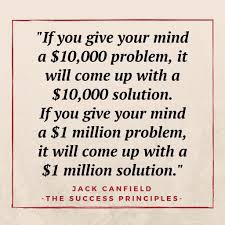
3-“You can lose the material things, but you can never lose your mastery—what you learn and who you become in the process of achieving your goals.”

4-“One of the great strategies for success is to act as if you already are where you want to be.”
5-“The world doesn’t pay you for what you know; it pays you for what you do.”


Part One: The Fundamentals of Success

1-Take 100% Responsibility of Your Life
2-Be Clear Why You’re Here
3-Decide What You Want
4-Believe It’s Possible
5-Believe in Yourself
6-Use The Law of Attraction
7-Unleash The Power of Goal-Setting
8-Chunk It Down
9-Success Leaves Cues
10-Release The Breaks
11-See What You Want, Get What You See
12-Act As If
13-Take Action
14-Just Lean Into It
15-Experience Your Fear And Take Action Anyway
16-Be Willing to Pay the Price
17-Ask! Ask! Ask
18Reject Rejection
19-Use Feedback to Your Advantage
20-Commit to Constant and Never-Ending Improvement
21-Keep Score for Success
22-Practice Persistence
23-Practice The Rule of 5
24-Exceed Expectations

Part Two: Transform Yourself for Success
1-Drop Out of The “Ain’t’ It Awful” Club . . . And 2-Surround Yourself with Successful People
3-Acknowledge Your Positive Past
4-Keep Your Eye on The Prize
5-Clean Up Your Messes and Your Incompleteness
6-Complete the Past to Embrace the Future
7-Face What Isn’t Working
8-Embrace Change
9-Transform Your Inner Critic into an Inner Coach
10-Transcend Your Limiting Beliefs
11-Develop Four New Success Habits a Year
12-99% Is a Bitch; 100% Is a Breeze
13-Learn More to Earn More
14-Stay Motivated with The Masters
15-Fuel Your Success with Passion and Enthusiasm

Part Three: Build Your Success Team

1-Stay Focused on Your Core Genius
2-Redefine Time
3-Build a Powerful Support Team and Delegate to Them
4-Just Say No!
5-Become a Leader Worth Following
6-Create a Network of Mentors and Others Who Will Up-Level You
7-Hire a Personal Coach
8-Mastermind Your Way to Success
9-Inquire Within

Part Four: Success and Money

1-Develop a Positive Money Consciousness
2-You Get What You Focus On
3-Pay Yourself First
4-Master The Spending Game
5-To Spend More, First Make More
6-Give More to Get More
7-Find a Way to Serve

Part Five: Success in The Digital Age

1-Master the Technology You Need
2-Brand Yourself with an Online Persona
3-Use Social Media in a Way That Enhances Your Reputation
4-Use the Exponential Power of Crowdfunding
5-Connect with People Who Can Expand Your Vision

At the end of this book i am pricise aome fact which is  tell you specifically. these lesson if everyone follows noone can stop him .

1-“Everything you think, say, and do needs to become intentional and aligned with your purpose, your values, and your goals.”
“Everything you experience today is the result of choices you have made in the past.”
2-“The day you change your responses is the day your life will begin to get better!”
3-“Complaining is an ineffective response to an event that does not produce a better outcome.”
4-“Learn to replace complaining with making requests and taking action that will achieve your desired outcomes.”
5-“If you find yourself in a situation you don’t like, either work to make it better or leave.”
6-“The only thing that will change your results is to change your behavior.”
7-“One of the easiest ways to begin clarifying what you truly want is to make a list of 30 things you want to do, 30 things you want to have, and 30 things you want to be before you die. This is a great way to get the ball rolling.”
8-“The create a balanced and successful life, your vision needs to include the following seven areas: work and career, finances, recreation and free time, health and fitness, relationships, personal goals, and contribution to the larger community.”
9-“If you limit your choices only to what seems possible or reasonable, you disconnect yourself from what you truly want, and all that is left is a compromise.”
10-“Stated in its most basic form, the Law of Attraction says, what you think about, talk about, believe strongly about, and feel intensely about, you will bring about.”
11-“You can lose material things, but you can never lose your mastery—what you learn and who you become in the process of achieving your goals.”
12-“One of the great things about living in today’s world of abundance and opportunity is that almost everything you want to do has already been done by someone else.”
13-“One of the great strategies for success is to act as if you already are where you want to be.”
14-“The world doesn’t pay you for what you know; it pays you for what you do.”
15“Many people fail to take action because they’re afraid to fail. Successful people, on the other hand, realize that failure is an important part of the learning process.”
16-“If you want to remain calm and peaceful as you go through life, you have to have high intention and low attachment.”
17-“If you want to be more successful, you have to start hanging out with more successful people.”
18“An important part of any focusing regimen is to set aside time at the end of the day—just before going to sleep—to acknowledge your successes, review your goals, focus on your successful future, and make specific plans for what you want to accomplish the next day.”
19-“If you are going to become more successful, you have to get out of denial and face what isn’t working in your life.”
20-“Successful people adhere to the ‘no exceptions rule’ when it comes to their daily disciplines.”
21“To learn and grow in life, you need to be teachable, too.”
22-“Of course motivation is not permanent. But then neither is bathing, but it is something you should do on a regular basis.” – Jim Rohn
23-“When you do something you love with passion and perseverance, you are already a success.”
24-“The most successful people I’ve met love what they do so much, they would actually do it for free.”
25-“Ask yourself, ‘what is the why underneath what I am doing?’ If you can get in touch with that, it is a lot easier to get enthusiastic about whatever it is that you have to do.”
26-“Successful people speak words of inclusion rather than words of separation, words of acceptance rather than words of rejection, and words of tolerance rather than words of prejudice.”
27-Always ask yourself, ‘Is what I am about to say going to advance the cause of my vision, mission, and goals? Will it uplift the hearer? Will it inspire, motivate, and create forward momentum? Will it dissolve fear and create safety and trust? Will it build self-esteem, self-confidence, and a willingness to risk and take action?’ If not, find words that will, or keep silent.”
28-“Often, we use words in a damaging way not because we are bad people but simply because we are not paying attention.”
29-“If you choose to live by a higher set of standards, you get to watch people respond enthusiastically toward you.”
30-“When you establish a higher level of personal standards, not only do you get better treatment from those around you, but suddenly you also begin attracting others with the same elevated standards.”
31-“To become wealthy, you’ll need to surface, identify, root out, and replace any negative or limiting beliefs you may have about money.” 
32-“Ask yourself if what you’re buying is a need or a want. There is a big difference.”

Friday, 15 May 2020

12 Rules of life by Jorden

12 RULES OF LIFE:

Rule 1: Stand Up Straight With Your Shoulders Back
Rule 2: Treat Yourself Like Someone You Are Responsible for Helping
Rule 3: Make Friends with People Who Want the Best For You
Rule 4: Compare Yourself to Who You Were Yesterday, Not Who Someone Else is Today


Rule 5: Do Not Let Your Children Do Anything that Makes You Dislike Them
Rule 6: Set Your House in Perfect Order Before You Criticize the World
Rule 7: Pursue What is Meaningful (Not What is Expedient)
Rule 8: Tell the Truth, or at least Don’t Lie
Rule 9: Assume that the Person You Are Listening to Might Know Something You Don’t
Rule 10: Be Precise in Your Speech
Rule 11: Do Not Bother Children when they are play games
Rule 12: Pet a Cat When You Encounter One on the Street
 visit on my  https://www.facebook.com/ansh.traders.731
Read more articals for self improvement..
vist on my blog www.vishalseth1904.blogspot.com

Change Ahead(Little things change your perception)

5 Little-Known Facts About Habits That Will Change The Way You Look At Them Forever Vishal seth july 16 ,2020· 6 min read Habits...